Lead intake & follow-up
Capture inquiries from forms, email, SMS, or calls; qualify them; answer common questions; and move the right opportunities forward.
Routing · qualification · reminders · schedulingAI automation for service businesses
I help businesses turn repetitive admin, scattered follow-up, and manual handoffs into connected AI workflows that fit the way their teams actually operate.

What we can improve
The opportunity is usually hiding in the processes your team does every day: answering, sorting, scheduling, preparing, checking, updating, and following up.
Capture inquiries from forms, email, SMS, or calls; qualify them; answer common questions; and move the right opportunities forward.
Routing · qualification · reminders · schedulingSort incoming messages, extract the important details, prepare useful responses, and make sure requests reach the person who owns the next step.
Email · SMS · call notes · client updatesGather missing information, prepare routine documents, check prerequisites, and organize review or signature workflows.
Intake · preparation · review · e-signingCoordinate appointments, tours, field work, vendors, and internal tasks without relying on someone to manually relay every detail.
Calendars · dispatch · confirmations · escalationTurn scattered activity into a useful view of what is happening, what is stalled, and what deserves attention.
Dashboards · summaries · alerts · audit trailsGive an AI assistant a defined role, approved tools, business context, and clear boundaries instead of deploying a generic chatbot.
Role design · tool access · guardrails · oversightBeyond a chatbot
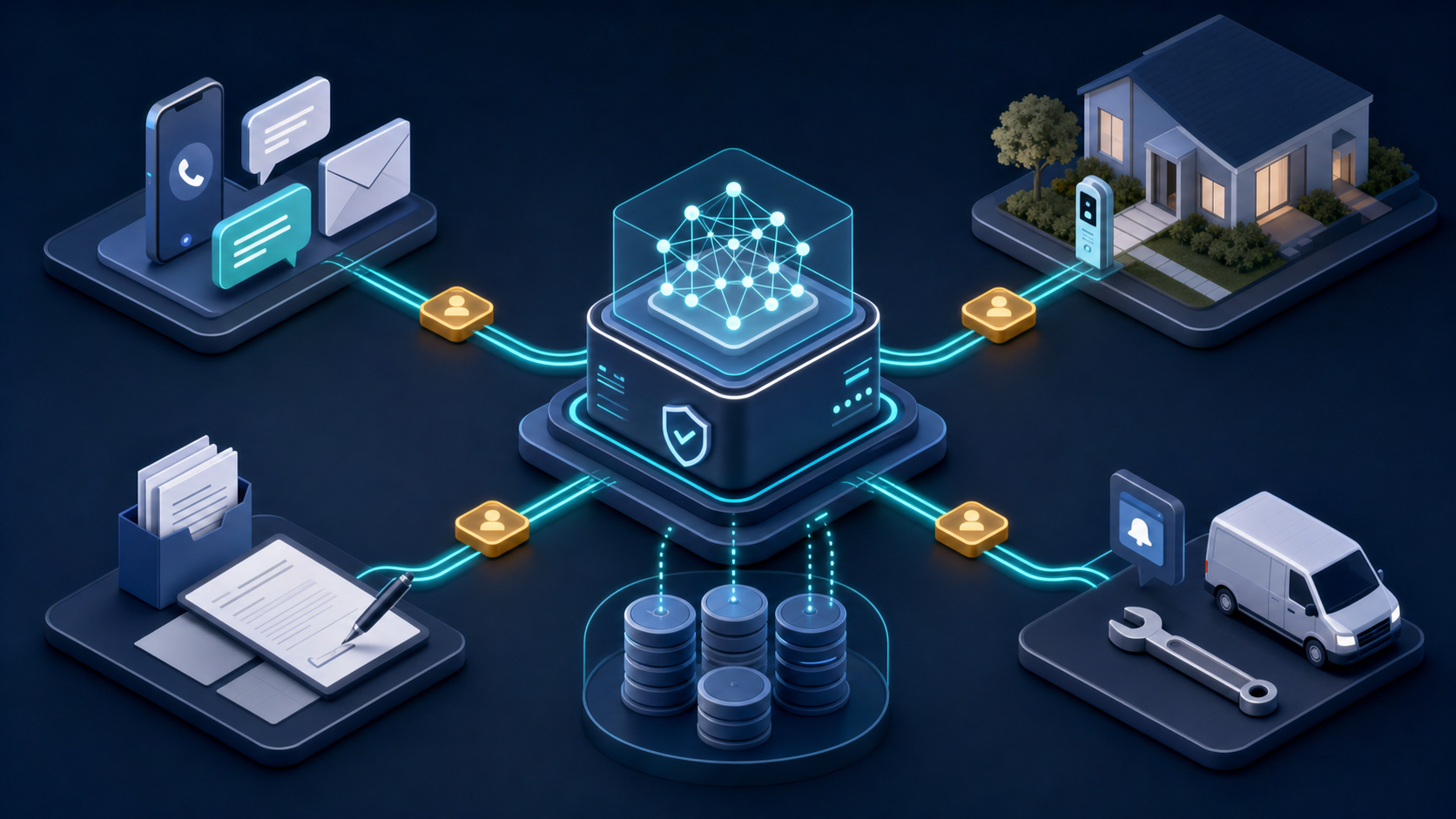
A connected workflow does more than generate text. It notices an event, understands the context, takes an approved action, records what happened, and knows when a person should step in.
Talk through a processA lead arrives, a client replies, a document changes, or a task becomes overdue.
The workflow identifies the request, gathers context, and determines the next approved action.
It updates a system, prepares a response, schedules work, creates a task, or moves the process forward.
Uncertainty, exceptions, and high-impact decisions go to a person with the context needed to decide.
A practical place to start
The first engagement is designed to find a real opportunity, reduce uncertainty, and produce something your team can evaluate in actual work.
A focused review of one operational workflow, followed by an opportunity map, recommended pilot, risk notes, and a practical implementation path.
See if your workflow fits ↗We identify a process that consumes time, creates delays, or depends on too much manual follow-up.
We document the people, decisions, tools, data, exceptions, and risks—not just the happy path.
We create one useful automation, test it with real work, and measure whether it deserves to expand.
The system grows from evidence, user feedback, and operating results instead of a giant upfront transformation plan.
 Case study · Real estate operations
One example in practice
Euphoric Development Partners is the production environment for an AI operating ecosystem built around real leads, clients, tenants, vendors, transactions, documents, payments, and field work.
EDP is a case study—not a template. The same design principles can be applied to the repetitive work inside many service businesses.
“Good automation respects the business, the people doing the work, and the decisions that still require judgment.”
About Andrew
I have led businesses, served clients, supervised teams, and worked through the messy operational problems that rarely fit a clean software demo. That experience shapes how I approach AI.
As a REALTOR® and managing broker, I have handled approximately 400 real estate transactions while working directly with clients, agents, landlords, tenants, and vendors. That front-line experience helps me recognize where communication breaks down, administrative work accumulates, and practical automation can make a measurable difference.
My operating background also includes eight years in the U.S. Army Reserve, a 13-month deployment to Iraq supporting executive protection, and ownership of a bar, restaurant, and catering business. Those environments taught me to value clear handoffs, dependable systems, and sound judgment under pressure.
I define the requirements, product direction, architecture, tests, and release decisions while using modern coding agents throughout development. The goal is not more technology. It is a system people trust because it makes their work easier.
AI opportunity questionnaire
Tell me about one process that is repetitive, slow, fragmented, or dependent on too much manual follow-up. I’ll review it personally and tell you whether it looks like a strong fit for automation.
Prefer a conversation first? Email Andrew directly ↗